I am an MIT reject, but it was likely one of the best things that ever happened to me. Instead, I was accepted into the engineering program at CMU,1 where you were admitted into two different degree programs and had to choose one at the end of your first year. I was offered electrical and computer engineering (ECE) and chemical engineering (CHE). After taking introductory courses in both, the choice of CHE was clear to me. It is, from my experience, the broadest engineering discipline, with mechanical engineering a close second. I wanted concepts and skills that would give me access to a broad range of future jobs, and the combination of physics, chemistry, math, and team project work in CHE was the best fit. The software/hardware aspects of ECE did appeal to me, but I realized that what I was actually interested in was computer science, not electrical engineering. Those skills were still accessible through a minor or double major, where I chose the latter.

The non-negotiable base for a countercurrent engineering career is math, the natural sciences, computer science, and philosophy. Philosophy is the most overlooked, and when it is studied, it is typically through the lens of professional practice. The little coursework I have completed in philosophy has been, by far, the most impactful for my career. How can you be functional in society without some formal study of logical analysis, reasoning, and ethics? Philosophy teaches you to reason about which problems are worth solving from a logical and ethical perspective, which is a question engineering training rarely seems to involve. It also teaches tolerance for ambiguity, which technical training strips away.
The orthodox path is to specialize, commit to an area early, building experience in that area. I am advocating for the opposite: study widely, including non-technical skills like psychology, communications studies, and other social sciences. This is definitely a tougher path because most engineering programs have very few complementary studies electives. The challenge is, in my opinion, outweighed by the rewards:
- How will you determine which problems are worth solving without logic and reasoning? (philosophy)
- How will you understand and adapt to people in the workplace? (psychology)
- How will you communicate with clients, management, and technicians? (communications)
A study by Merluzzi and Phillips found that specialists received fewer job offers and lower compensation than people with broader backgrounds.2 David Epstein’s Range argues that in complex, unpredictable environments, generalists outperform specialists because they draw on broader mental models and recognize analogies across domains.3 A countercurrent career is that kind of environment. You cannot predict where your career will lead, so you cannot afford to optimize for a single destination.
None of us know where our career path will lead. I had no intention of becoming a professor when I graduated, but here I am. Breadth does come at the cost of depth, but depth fails when it does not align with what the job actually needs. Remember the full version of the saying: “Jack of all trades, master of none, but oftentimes better than master of one.” Your weaknesses and overall capability to adapt will be the limiting factors in getting employed, staying employed, and growing.
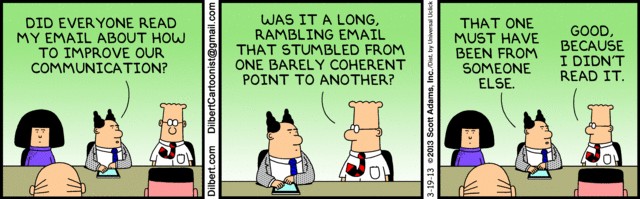
I know this because it is my own mistake. Communication and interpersonal skills were my main weaknesses, and instead of working on them early, I let them hinder my career to this day. The countercurrent path requires capabilities that will not all come naturally, and the discipline to work on the ones you are bad at is what matters most. This is harder than it sounds. Working on something you are bad at goes against human nature. That is why it is a countercurrent move, and why it requires discipline and stamina.
Breadth also lets you make transitions you cannot anticipate. Ursula Burns studied mechanical engineering and went from a summer internship at Xerox to CEO.4 Herbert Hoover was a mining engineer before he ran WWI food relief and ended up president. Jimmy Carter’s nuclear engineering training came before his career in diplomacy and humanitarian work. What let them move was not breadth alone, but breadth paired with a deep anchor — enough technical mastery to move into new territory without losing your footing.
Once you have met your minimum criteria for stability and financial security, the question changes. The prevailing current says accumulate: more profit, more responsibility, more power. The countercurrent path is to know when to stop, once your minimum criteria are met, and to seek different and more meaningful growth. How can you maintain that minimum criteria while doing work that benefits society? Volunteering and donating to charity are not enough. Your career itself should serve society. That is one of the key characteristics of engineering, to solve problems for a sustainable society.
Footnotes and references compiled with an open-weight AI model.
-
Carnegie Mellon University (CMU) is a private research university in Pittsburgh, Pennsylvania, known for its engineering, computer science, and fine arts programs. See cmu.edu/about. ↩︎
-
Merluzzi & Phillips (2016) found that specialists in investment banking received fewer job offers and lower compensation than those with broader backgrounds. See HBR, “Generalists Get Better Job Offers Than Specialists”. ↩︎
-
David Epstein’s Range: Why Generalists Triumph in a Specialized World (2019) argues that in complex, unpredictable environments, generalists outperform specialists. See davidepstein.com/range. ↩︎
-
Ursula Burns studied mechanical engineering at Polytechnic/Columbia and rose from a Xerox summer internship to CEO. See ASME, “Ursula Burns: Engineer to CEO”. ↩︎