“The real problem of humanity is the following: we have paleolithic emotions, medieval institutions, and god-like technology. And it’s terrifically dangerous.”
— E.O. Wilson1
On the evening of September 23, the Waterloo Forum, a student-run initiative that hosts public debates on campus, convened a debate at the University of Waterloo’s main campus on the motion “Are tech bro executives the greatest threat to humanity?” between Dr. Umair Shah (in favor) and myself (in opposition), moderated by Psychology undergraduate student Jordan Bauman. The highlight of the evening and the bulk of the event were dedicated to questions from the audience. An article on the debate is forthcoming in The Imprint, the University of Waterloo’s student newspaper. This note is a reflection on the argument that I made against the motion, written out in more detail than the version compressed into the event’s opening statement.
The focus on “tech bro” executives is cast based on, right or wrong, the assumption that they are the principal authors of whatever the technology industry does to the world. Increasingly, the links that tech bro and other executives have to political influence, in addition to control of their companies, have been put in the spotlight by high profile events and meetings that mix the corporate and the political.
The case for the motion is real, but not strong enough#
The case for naming executives as the threat has three genuinely strong components. First, the executives themselves signed a statement warning of catastrophe: in May 2023, leaders including Sam Altman, Demis Hassabis, Geoffrey Hinton, and Yoshua Bengio signed the one-sentence statement that “mitigating the risk of extinction from AI should be a global priority alongside other societal-scale risks such as pandemics and nuclear war.”2 When the indicted parties sign the indictment, it deserves to be taken seriously. Second, many of software platforms and services that these executives are responsible for do seem deliberately harmful: through enabling mass surveillance, AI-enabled utilization of that surveillance, and increasingly the automation of violence and war. The Carnegie Endowment documented at least seventy-five countries deploying AI surveillance, with American corporations selling the underlying technology into thirty-two of them; data-centre electricity demand is projected to double by 2030.3 They are also responsible for other lesser evils such as the pattern Cory Doctorow calls “enshittification,”4 in which platforms first serve users, then abuse them for business customers, then abuse everyone for shareholder value.
My argument grants all of this. In the debate I conceded the motion’s premise directly: tech executives are powerful, they are a new kind of oligarch, and they are worse than the old ones, because what they hold is not only media ownership but fine-grained personal data about each of us, updated on a daily, hourly, or even finer basis: what we read, where we go, what we buy, who our friends are, what our politics are. None of that data was taken through intimidation or seized by clandestine means; we handed it over freely, and we continue to. The tools of authoritarianism are being automated and prepared for scale-up, with the alpha versions tested by violent authoritarian regimes around the world while the beta versions are well on their way to being deployed here. But remove or replace every tech executive tomorrow, and shortly after, there will be more, different but the same, because our collective behavior enables and even promotes the arrangement. The real problem is not them; it is us.
My argument against the motion follows the approach I would take as an engineer: rather than making the easier counterclaim that state violence or climate change is the greatest threat, it focuses on root causes, because correcting a root cause resolves many of the problems that might have arisen in the future. On that analysis, state violence, state terrorism, environmental damage, and the creation of oligarchs are all symptoms of the same underlying condition. The greatest threat to humanity is its own collective behavior, in three forms, in order of harmfulness:
- Non-rational collective decision-making We collectively make decisions without critical, logical, and well-informed thought.
- Asymmetric responsibility We tend to refuse to take responsibility for our own negative actions, while viciously insisting that others take responsibility and be punished for their negative actions.
- In-group preference over species-level good We value our identity, culture, and our perceived clan/nation above the greater good for humanity (its survival).
The three are listed in this order because the first is upstream of the other two: no collective can fix what it cannot think about.
Deciding without thinking#
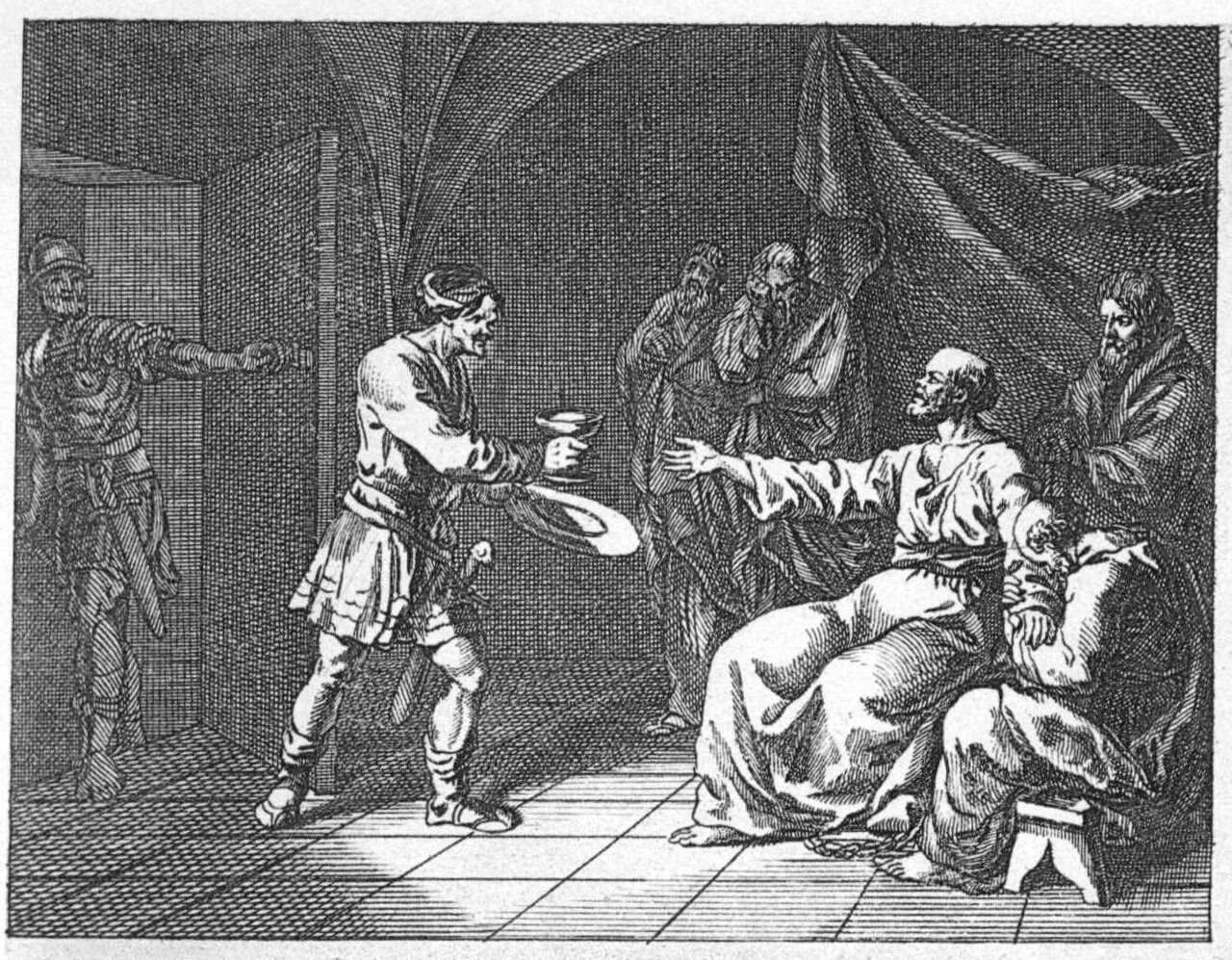
The ideal collective is composed of individuals who think critically and logically and seek out the highest-quality information available. Properly organized, such a collective would be greater not just in number but in quality: more minds focused on the same task can solve it more effectively. That is the ideal our civilization assumes every time it trusts a committee, a parliament, or a market. From many years of observation, this is not how humans tend to think and decide. I have spent a decent part of my life around lower and working-class people, and another decent part around the well-educated and privileged, and I do not see much of a difference in the thinking and decision-making of these two samples of humanity, except that the latter tends to carry more confidence, more credentials, and more claimed expertise.
The psychology of collective decision failure is well documented. Solomon Asch’s conformity experiments (1951) showed subjects erring less than 0.7 percent of the time when answering alone against an obvious perceptual task, but in a group setting conforming to a unanimous wrong answer on a third of responses, and at least once among roughly three quarters of subjects; the finding replicated in 2023.5 Dan Kahan and colleagues showed that political polarization over identical data was largest among the most numerate subjects, who used their quantitative skill selectively to reach the conclusion their politics preferred, a pattern the authors call identity-protective cognition.6 The sharing of misinformation is dominated not by malice but by inattention: in a 2021 study, roughly half of false-news sharing was explained by simple failure to think, another third by mistaken judgments of accuracy, and only about one in six by knowing intent.7 The crowd is not evil; it is not looking, and a substantial portion of the modern information economy is optimized for exactly that not-looking.
These findings suggest rational thinking depends less on education and raw intelligence than we would like to believe, and more on courage. I do not have a citation for that, just years of observing engineers, students, executives, and tradespeople demonstrate over and over that humans tend to value conformity and compliance more than individuality and logic. The machinery for thinking together exists, namely democracy, but it requires people willing to think alone, and that willingness is in short supply.
These findings compose a specific picture. The failure is not concentrated in a class of unusually bad decision-makers; it is distributed across the population, scales up with intelligence, and is most visible precisely where stakes and identity are highest. The tech bro executive class is not exempt from it, but neither does it originate with them.
Refusing responsibility, demanding punishment#
The second form is the asymmetry documented in the attribution literature: the tendency to explain the failures of others by their character and one’s own by circumstance (the fundamental attribution error), reinforced by the scapegoat mechanism by which a community dissipates tension by directing punishment at an outsider.8 A motion that indicts a class of individuals for harms produced by structural incentives is a textbook instance: character-based blame directed outward, circumstance-based excuse retained inward.
The pattern scales to the level of civilizations, and the honest accounting is uncomfortable. The historical record of the European colonization of the Americas includes a demographic collapse of roughly ninety percent of the indigenous population following contact, with documented deliberate policy components: removal, massacre, forced assimilation.9 The United States enslaved approximately 12.5 million Africans,10 millions of them from birth. It used weapons of mass destruction against civilian populations, twice, and coordinated violent coups.1112 These are not the actions of anomalous individuals but instead actions supported and sustained by electorates composed of tens of millions of people. The executive-as-villain narrative asks a small, visible class of people to carry a blame that belongs to the collective that built, funded, elected, and purchased its way into these outcomes.
The remedy side of this threat is the harder part, because being sorry is not enough. Taking responsibility for the actions of a collective starts with individual responsibility: how you vote, what you buy, and accepting that your collective responsibility starts with your individual contribution to it.
The clan above the species#
Social psychology research grounds this claim. Minimal-group experiments show in-group favoritism even among groups invented literally minutes earlier by researchers. Parochial altruism, the pairing of in-group loyalty with out-group hostility, appears to be an evolved combination rather than an accident.1314 The budgetary record quantifies it: world military expenditure stood at USD 2,718 billion in 2024, against roughly USD 115.9 billion in developed-country climate change mitigation finance in 2022, an order-of-twenty difference in the resources devoted to protecting clans from each other versus sustaining the species.1516
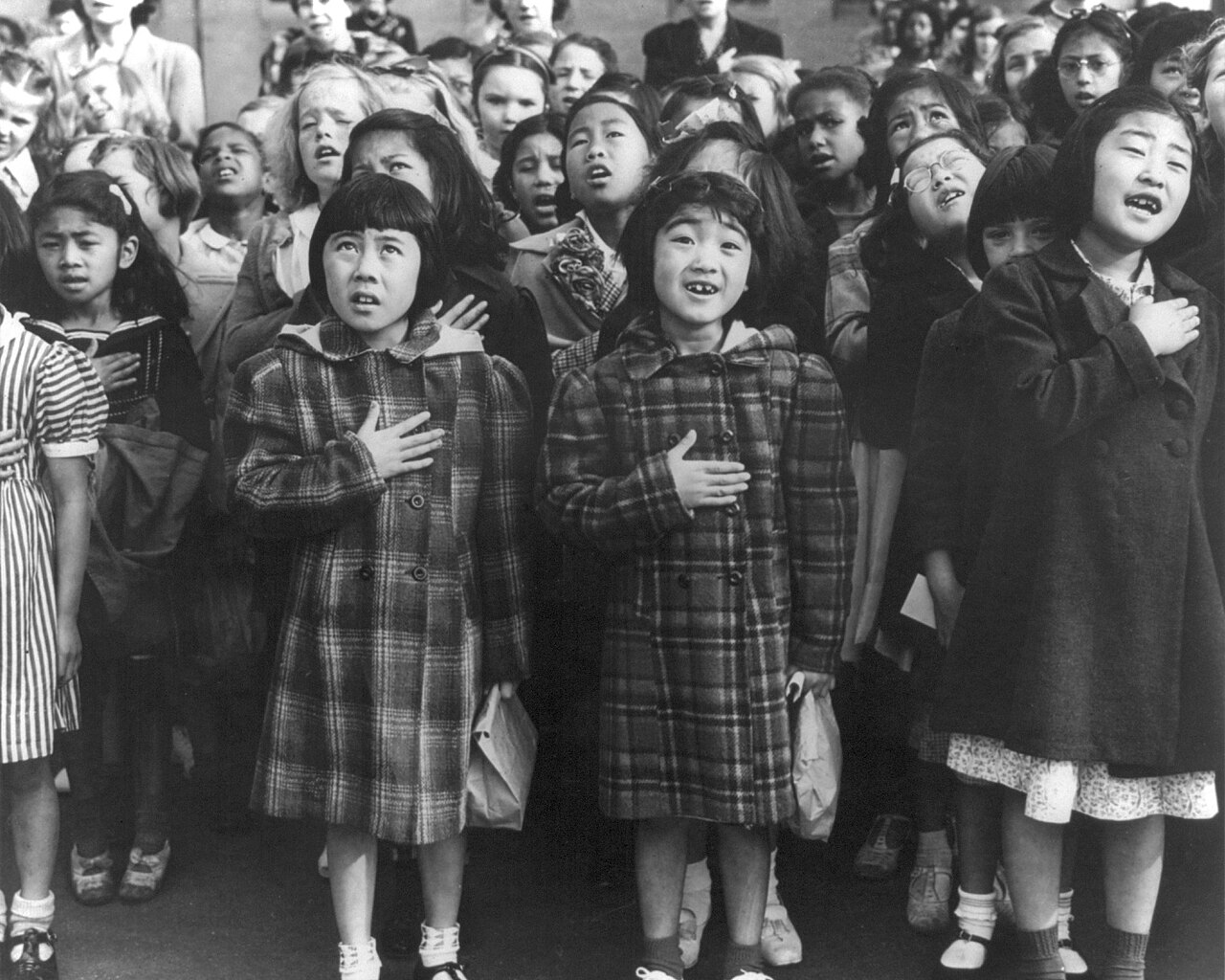
Another more personal example focuses on my own homeland, the United States of America. From kindergarten through twelfth grade, every school morning of mine began with the Pledge of Allegiance, a promise of liberty and justice for all. The founding documents of the republic promise something larger: the Bill of Rights refers not to citizens but to people and persons. This means that its rights apply to all persons within US jurisdiction, a universal framing adopted in the late 1700s, centuries before the Universal Declaration of Human Rights made that language standard. This was a great promise to humanity, and it has not been honored to this day: the men who wrote those founding documents, stating that all men are created equal, enslaved other men. The gap between the universal promise and the national practice is another example of in-group preference.
The structure of the threat, and of the remedy#
If the threat is collective behavior, its remedies are also collective. The behavioral findings point to concrete practices: individuals choosing to decide slowly when the crowd is fast; owning one’s share of failures rather than focusing on blaming others; widening the circle of concern past the clan, because the scale on which survival is decided is global. None of these requires a revolution, new laws, or better tech bro executives. The relevant virtue is not intelligence, which the evidence shows is applied selectively in service of prior conclusions, but courage: the willingness to reach conclusions against the pull of the crowd, the in-group, and the flattering narrative, and to take responsibility for yourself and your collective while getting to work on making things better.
Footnotes and references compiled with an open-weight AI model.
E.O. Wilson, in debate with James Watson, Harvard Museum of Natural History, September 9, 2009. Verified against a published transcript. Widely misattributed to Margaret Mead. ↩︎
Center for AI Safety, “Statement on AI Risk,” May 2023, safe.ai/statement-on-ai-risk; signatories reported by The Verge, May 30, 2023. ↩︎
Feldstein, S., “The Global Expansion of AI Surveillance,” Carnegie Endowment for International Peace, 17 September 2019. ↩︎
Doctorow, C., “Tiktok,” Wired, January 2023 (CC-BY, from Pluralistic): “Here is how platforms die: First, they are good to their users; then they abuse their users to make things better for their business customers; finally, they abuse those business customers to claw back all the value for themselves. Then, they die.” ↩︎
Asch, S.E., “Opinions and Social Pressure,” Scientific American 193(5), 1955, pp. 31-35, DOI 10.1038/scientificamerican1155-31; first experiments at Swarthmore College, 1951, in Groups, Leadership and Men (Carnegie Press). Control error below 0.7%; 35.7% of actor-condition responses conformed; 74% conformed at least once. Replication: Franzen & Mader, PLOS ONE 18(11), 2023, e0294325, DOI 10.1371/journal.pone.0294325. ↩︎
Kahan, D.M., Peters, E., Dawson, E.C., Slovic, P., “Motivated numeracy and enlightened self-government,” Behavioural Public Policy 1(1), 2017, pp. 54-86, DOI 10.1017/bpp.2016.2. ↩︎
Pennycook, G. et al., “Shifting attention to accuracy can change misinformation responses,” Nature 592, 2021. Of people who shared false news in the associated survey, roughly 50% did so because of inattention, 33% were mistaken about accuracy, and 16% shared knowingly. See news.mit.edu/2021/social-media-false-news-reminders-0317. ↩︎
Fundamental attribution error and self-serving bias: APA Dictionary of Psychology, dictionary.apa.org/fundamental-attribution-error and dictionary.apa.org/self-serving-bias. Scapegoat mechanism, via René Girard: britannica.com/question/What-is-the-scapegoat-mechanism-in-Rene-Girards-theory. ↩︎
Koch, A., Brierley, C., Maslin, M.M., Lewis, S.L., “Earth system impacts of the European arrival and Great Dying in the Americas after 1492,” Quaternary Science Reviews 217, 2019. ↩︎
SlaveVoyages Transatlantic Slave Trade Database (slavevoyages.org): approximately 12.5 million Africans embarked, about 10.7 million survived the Middle Passage, 1526-1866. ↩︎
Atomic bombings of Hiroshima and Nagasaki, 6 and 9 August 1945 (standard historical record). ↩︎
Central Intelligence Agency acknowledgement of its role in the 1953 Iranian coup, declassified documents released August 2013. ↩︎
Tajfel’s minimal group paradigm, via social identity theory: participants systematically award more to in-group members even when groups are arbitrary. See britannica.com/topic/social-identity-theory. ↩︎
Choi, J.-K., Bowles, S., “The coevolution of parochial altruism and war,” Science 318, 2007, DOI 10.1126/science.1148238. ↩︎
Ratio is computed, not published: developed countries provided USD 115.9 billion in climate finance in 2022 (OECD); world military expenditure was USD 2,718 billion in 2024 (SIPRI, April 2025). The years differ; the ratio is on the order of twenty times. ↩︎
Hardin, G., “The Tragedy of the Commons,” Science 162, 1968, pp. 1243-1248, DOI 10.1126/science.162.3859.1243. ↩︎